
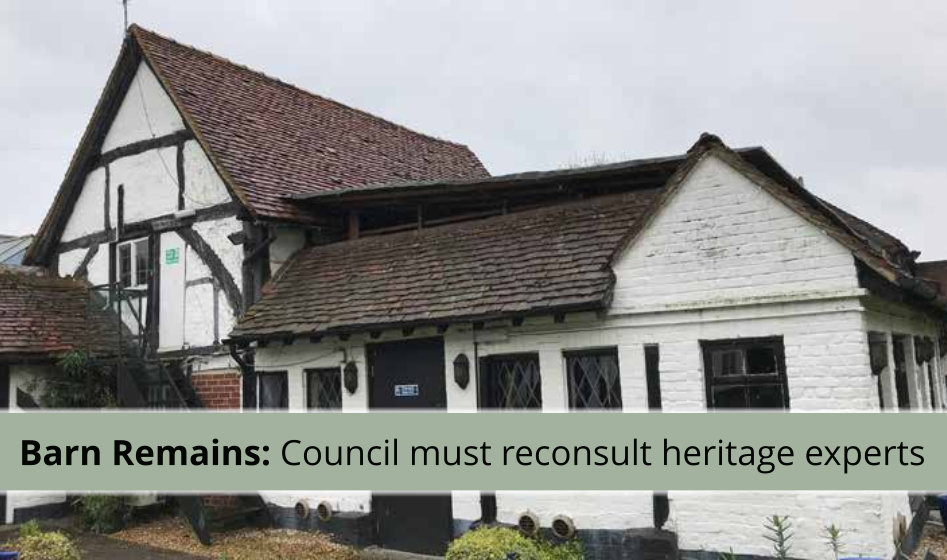
The developer has now submitted a completely redesigned scheme for the Barn Hotel planning application. This includes a new masterplan, new building layouts, revised heights, altered roof forms, and a different approach to the setting of the listed barns.
Although the Council stated they were waiting to validate the amended Listed Building Consent plans, these documents have already appeared on the planning portal, and no reconsultation took place when the new material was first uploaded in April. A formal re-consultation has now finally started so that residents can comment on the new proposals.
A Full Redesign, Not a Minor Tweak
The new layout is not just a small adjustment; the 2026 plans effectively replace the 2024 scheme entirely. Key changes include:
- Rearranged Buildings: Buildings have been moved into entirely new street patterns.
- Altered Heights: Roof shapes and heights have been altered to step down near boundaries.
- Heritage Setting: The listed barns would now have private gardens and a completely different setting.
- New Access Strategy: Access and parking layouts have changed, featuring new internal routes through the site and a substantial reduction in parking provision.
- New Details: Landscaping and sustainability details are entirely new.
This represents a material shift from the 2024 plans and raises clear implications for residents living on Garden Close, Shenley Avenue, and surrounding streets – including increased traffic movements, servicing activity, noise, and potential congestion at peak times.
The Need to Protect Buried Heritage
Given the substantial scale of this redesign, the Ruislip Residents’ Association considers it essential that Historic England and the Greater London Archaeological Advisory Service (GLAAS) are formally reconsulted before the Council makes any decisions.
The RRA is deeply concerned that these substantial changes materially affect the site’s heritage setting. In October 2024, GLAAS provided clear advice on the original scheme, noting that the listed farm buildings indicate the site has archaeological interest. They explicitly warned that:
“new development or landscaping groundworks outside the post-war building footprints would likely damage or destroy buried archaeological features”.
Because of this risk, GLAAS recommended strict safeguards, including a two-stage archaeological condition starting with trial trenching, and a full historic building investigation prior to any demolition.
Why Reconsultation is Essential
Those vital safeguards were based on the footprints of the old 2024 layout. The new 2026 scheme introduces entirely new building footprints, altered ground levels, revised landscaping, and a different access strategy. All of these changes would impact the ground in new ways, potentially threatening buried archaeological remains.
Because the applicant has replaced the entire masterplan, the RRA believes the Council has a clear procedural duty to reconsult both Historic England and GLAAS. Their expert guidance must be updated and applied to the revised proposals. Residents must be confident that the necessary investigations, protections, and conditions are properly secured before this application is allowed to proceed
Read Greater London Archaeological Advisory Service‘s response from October 2024
What do the heritage experts say?
Read the original October 2024 advice from Historic England’s archaeological service (GLAAS). The letter explicitly warns that new groundworks “would likely damage or destroy buried archaeological features,” highlighting exactly why the RRA is demanding a formal reconsultation on the new 2026 layout.
So what next?
The consultation on the new version of the application starts today (11th May 2026) and Ruislip Residents’ Association is working through the details now. We will be back with more details once we have read through things ourselves.
If you join our newsletter mailing list, we’ll be able to let you know more when we have something to actually say – it’ll be a couple of days.

Comments are closed.