
This is an increase of 3515 subscribers since the mid-April figures supplied in the FOI answer and included in our original article. The Council tell us that they have sent two emailed reminders to previous subscribers.
These updated figures mean that 4740 subscribers from last year have not renewed this year. The article uses the original figures, as we had been provided for mid-April and used in our 6th May article.
When Hillingdon Council introduced its garden waste charge, residents were told it would help save money and protect services. The Council approved a £70 subscription charge for the 2025/26 financial year, aiming to contribute £2.5 million towards the Council’s budget savings.
Following the introduction of the charge, we asked the Council for waste tonnage data, subscription figures, and information about enforcement. By combining this data with reports and budget documents, we now have a clearer picture of how the scheme is actually performing.
The figures show a clear change in residents’ behaviour: garden waste collected at the kerbside has fallen sharply, more garden waste is being taken to civic amenity sites, and residual black-bag waste has risen compared with the pre-charge average.
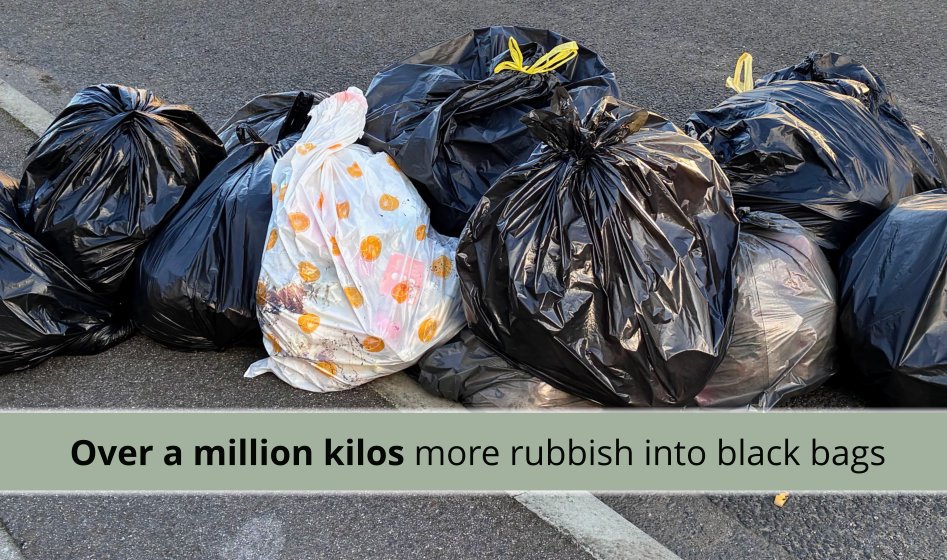
Visualising the impact: 1.2 million extra kilos in black bags
To compare like with like, we looked at the first comparable 30-week period after charging began, roughly July to late January. We compared the 2025/26 period against the average of the same 30 weeks across the previous three financial years.
Using this three-year average as the baseline, residual black-bag waste rose by approximately 1245 tonnes during the first 30 weeks of the new scheme.
At first glance, 1.2 million kilograms sounds almost unbelievable. But as the Council points out, Hillingdon collected 32.8 million kilograms of residual waste in the same period, so the increase is a 3.8% rise.
Put another way, using Hillingdon’s own waste figures, the increase is equivalent to adding around 12,000 extra Hillingdon residents’ worth of black-bag waste over the same 30-week period.
That is why the figure matters. A relatively small percentage shift in household behaviour, repeated across the whole borough, can add up to more than 1.2 million extra kilograms of residual waste.
Waste tonnage: the 30-week impact
The table below shows how disposal patterns changed compared with the three-year historical average.
| Waste category | 3-year average before charge | 2025/26 after charge | Difference |
| Kerbside garden waste | 6213 t | 3350 t | 2863 t fewer (-46%) |
| Garden waste at civic amenity sites | 1454 t | 1926 t | 472 t more (+33%) |
| Total recorded garden waste | 7667 t | 5276 t | 2391 t fewer |
| Residual waste / black bags | 31,586 t | 32,831 t | 1245 t more |
This does not prove that all of the extra residual waste was garden waste. However, it does show that the scheme has not simply moved grass clippings neatly from free kerbside collections into paid subscriptions or civic amenity sites.
Overall, around 2391 tonnes less garden waste was recorded through the Council’s kerbside and civic amenity site routes, while residual black-bag waste rose by around 1245 tonnes compared with the pre-charge average.
The concern is not that every household suddenly started filling black bags with garden waste. The concern is that even a small change, repeated across tens of thousands of homes, can produce a borough-wide increase of this scale.
The displacement penalty and disposal costs
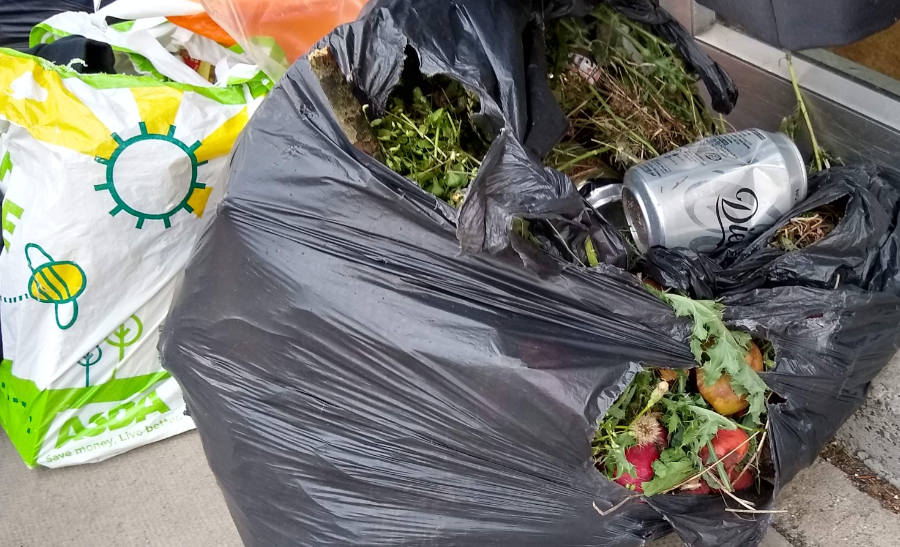
This shift saves money for residents who choose not to pay the subscription, but costs everyone in the long term. According to the Council’s May 2025 report, segregated garden waste costs £40.18 per tonne to dispose of, while general residual waste costs £146.22 per tonne. The report also recognised that if garden waste is disposed of within general waste, it could affect the ability to maximise savings.
This means every tonne of garden waste that ends up in black bags rather than being collected separately costs the Council an extra £106.04 per tonne
Based on the 1245-tonne increase in residual waste compared with the historical average, the estimated additional disposal cost is:
| Calculation | Amount |
| Extra residual waste compared with pre-charge average | 1245 t |
| Extra cost per tonne | £106.04 |
| Estimated extra disposal cost | about £132,000 |
This is an estimate, because the FOI data does not prove that all of the additional residual waste was garden waste. But it gives a reasonable indication of the potential disposal penalty if garden waste is moving into the black-bag stream.
What happens to all the black bag rubbish?
It doesn’t go to landfill. It gets incinerated. The dustbin lorries collect in the kerbside collections, tip it out at the waste transfer station behind The Range and Currys in South Ruislip, then it gets packed onto a train and most of it gets taken to Bristol, where it is incinerated for “energy from waste”. There are details and videos on the West London Waste website.
Subscription income: falling short of the £2.5m target
The FOI response also allows us to assess whether the scheme is hitting its financial target. In its first year, 23,240 households subscribed at £70 each. That produced gross income of £1,626,800
But the financial picture changes once known costs and estimated disposal impacts are taken into account.
| Year 1, 2025/26 financial position | Amount |
| Gross subscription income | £1,626,800 |
| Less implementation cost | -£138,000 |
| Less estimated extra residual-disposal penalty | -£132,000 |
| Estimated contribution after known items | about £1.36 million |
Even before factoring in staff, vehicles, customer service, route planning, enforcement, or other operating costs, the scheme appears to be well below the Council’s original £2.5 million target. On this calculation, the was a shortage of around £1.14 million.
Year 2 renewals: a sharp drop so far
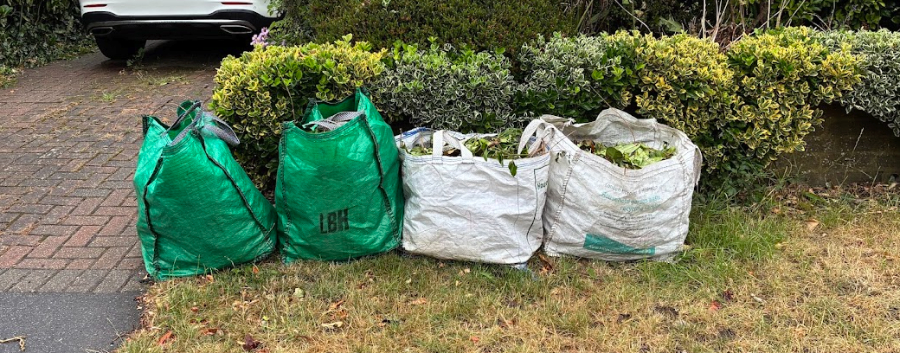
The position for the current 2026/27 financial year appears more difficult. The Council has raised the fee to £77, and resident subscriptions have fallen sharply. As of mid-April, only 14,985 households had subscribed — more than 8200 fewer households than in the first year. Current gross income is therefore only £1,153,845
With the tag costs and if there are similar residual-waste disposal impacts repeated in 2026/27, the position would look like this:
| Current 2026/27 position, mid-April | Amount |
| Gross subscription income so far | £1,153,845 |
| Less garden-waste bag tags | -£137,000 |
| Less estimated extra disposal penalty, if repeated | -£132,000 |
| Current estimated contribution | about £885,000 |
The service may gain more late subscribers. But on the figures currently available, the scheme is a long way short of the original £2.5 million justification.
Even before estimating any further operating costs, the current 2026/27 position is around £1.6 million below the original £2.5m target.
Administrative costs: a questionable “one-off”
When the charge was approved, the Council listed the £138,000 implementation cost, including £43,000 for tags, as being funded from a transformation budget.
That gave the impression that tag costs were part of the initial set-up.
However, the Council’s 2026/27 budget papers now include a budget-growth line specifically for “Garden Waste Bag Tags” amounting to £137,000 for every year.
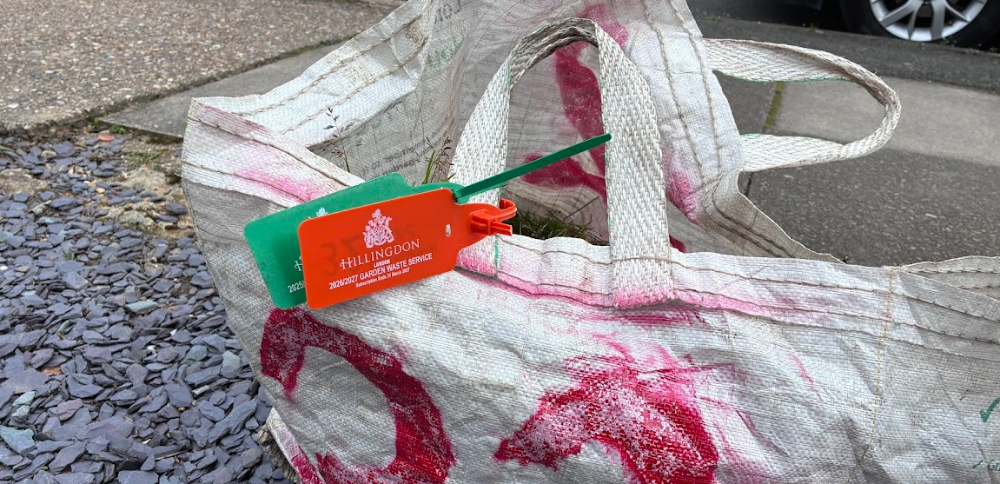
This suggests that producing and distributing the physical tags is not simply a one-off start-up cost. It appears to be an ongoing cost of running the scheme, at least within the current plan: the first year saw subscribers issued with green plastic tags, and the second year there are new orange tags.
Enforcement and monitoring
Before the charge was introduced, 26% of consultation respondents (over 2000 people) said they would put garden waste in general waste if they did not subscribe.
To address this risk, the Council said garden waste would not be accepted in black-bag waste, that black bags containing garden waste would not be collected, and that a sticker would be applied to bags containing garden waste or other unacceptable items. The Council also said officers would continue to monitor crew reports, tonnage reports and waste-composition analysis.
However, the FOI response confirmed that the Council does not hold data on how many warning stickers have been issued for garden waste in black bags. It only holds contamination rates as a whole. This makes it impossible for residents to verify how effectively the Council is policing misuse of black bags.
The political landscape
The garden waste charge has now become a central local election issue. At the Hillingdon Decides digital leadership hustings hosted by HARA on 21 April, the parties made their positions clear.
- The Liberal Democrats said they support weekly collections but are not happy with the current green-waste system, suggesting either a token-style approach or returning to the previous system.
- Reform UK said it would maintain weekly bin collections and scrap the garden waste tax immediately.
- The Green Party said it was in favour of getting rid of the charge and questioned whether it actually makes money.
- Labour said its manifesto includes maintaining free weekly bin collections and scrapping the garden waste charge.
- The Conservative Party declined to attend the digital hustings, but the charge was approved by the Conservative-led Council in May 2025.
(the garden waste question is at 56 minutes 24 seconds)
The bottom line
The garden waste charge has undeniably changed resident behaviour.
| Measure | Result |
| Kerbside garden waste | Down about 46% |
| Garden waste taken to civic amenity sites | Up about 33% |
| Residual black-bag waste compared with pre-charge average | Up about 1,245 tonnes |
| First-year subscription income | £1.63m |
| Estimated first-year contribution after known tag and disposal impacts | £1.36m |
| Gap against £2.5m target | about £1.14m |
| Current 2026/27 estimated contribution, if similar costs repeat | about £885k |
Far less garden waste is being collected at the kerbside. More is being taken to civic amenity sites. Residual waste is higher than the pre-charge average. And subscription income is well below the £2.5 million figure used to justify the policy.
The striking point is the scale: a 3.8% rise in residual waste may sound modest, but across Hillingdon it represents more than 1.2 million extra kilograms of black-bag waste – about 83,000 bags of compost, or 12,000 extra residents’ worth of rubbish over the same period.
For residents, the question is straightforward: is the garden waste charge really saving Hillingdon money – or has it simply moved the cost somewhere else?

Comments are closed.