
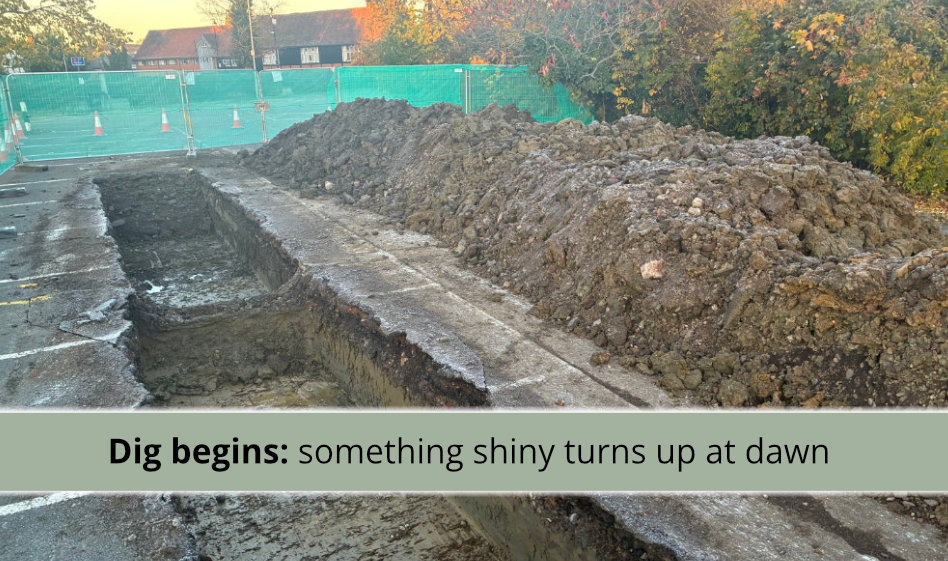
The long-awaited archaeological trial trenching at St Martin’s Approach car park began this week, and residents passing at dawn on Friday 13 November saw something few expected: a scatter of gold coins glinting on the spoil heaps beside the trenches.
Regular readers will know the story so far. The RRA first raised archaeological concerns about the Council’s plans for six new homes on part of the car park, and Historic England shared those concerns. After our April update, we reported that both Historic England and GLAAS wanted digs before determination.
Our Freedom of Information requests helped in uncovering Ruislip’s hidden history. In August we explained the St Martin’s dig plans set out in the Written Scheme of Investigation (WSI), and more recently asked what happened to St Martin’s. This week, at last, the spades went in.
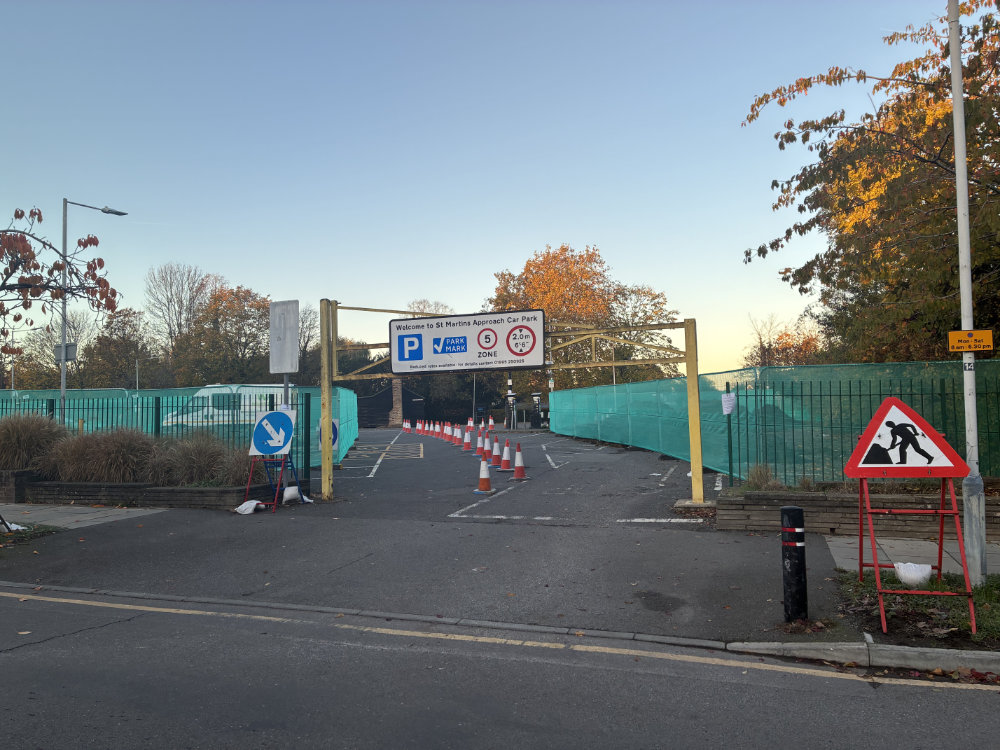
The dig is under way
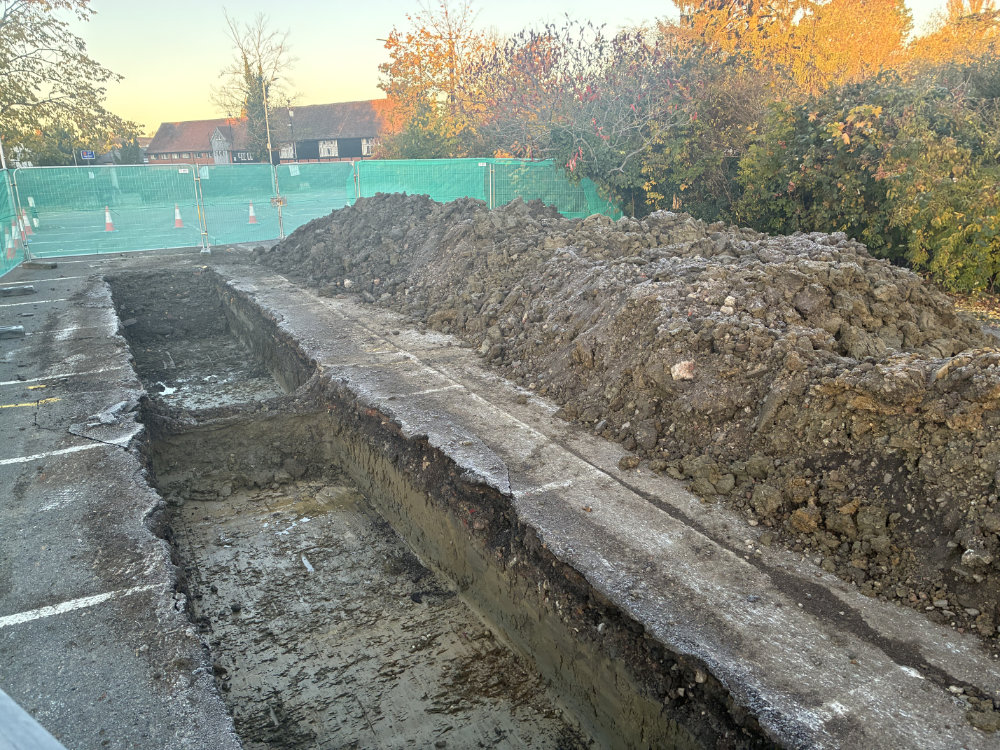
Hillingdon Council cannot decide planning application 49461/APP/2025/3009 for six houses on part of the car park until an archaeological evaluation has been done. This week the excavators dug the three trial trenches set out in the WSI. Each one is 15 metres long and 1.8 metres wide, inside the proposed housing footprint.
The car park is still partly open, but a good number of bays are suspended where the trench areas have been fenced off. The earth taken out is piled on the car park surface beside each trench. Please allow extra time if you’re parking for the shops or St Martin’s this week.
What was found
Early on Friday, a number of round, gold-coloured coins could be seen lying on and around the spoil. We estimate there are several dozen. They seem to be in remarkable condition, and most are still in what look like their original gold foil wrappings. That level of preservation is almost unheard of for Ruislip’s London Clay.
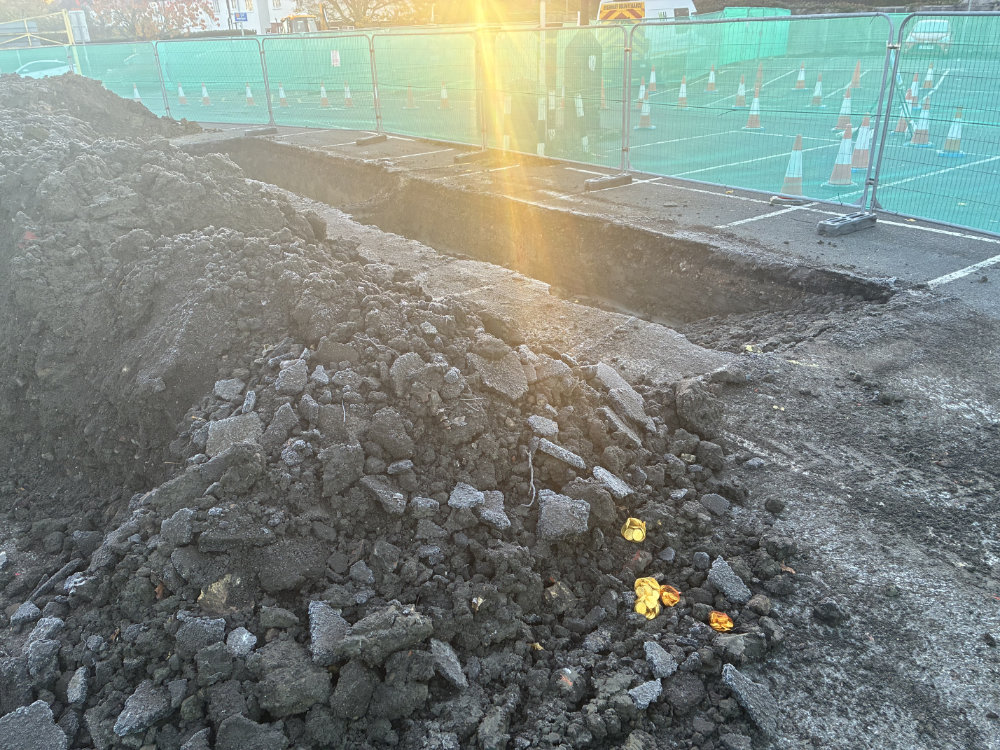
The level of preservation is extraordinary.
Several points stand out:
- The coins are on top of the spoil heaps, not in the trenches. That suggests they were deposited after the trenches were dug, so the stratigraphy may be harder to interpret than usual.
- Some appear to have been buried in fine mesh bags. As far as we know, that kind of container has never been recorded in medieval Ruislip.
- They softened a little as the morning warmed up. We are not aware of any precedent for this in gold.
- The priory here belonged to the Abbey of Bec in Normandy, and the monks’ links with the Continent may explain the coins’ apparently Belgian style.
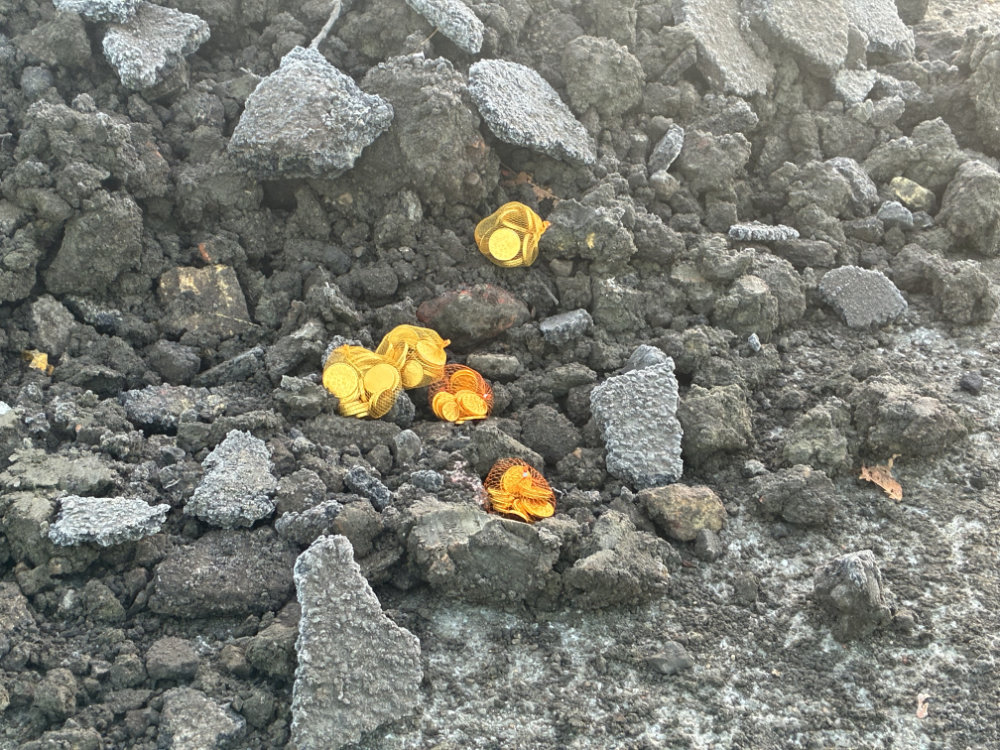
Detail of the “hoard”.
What happens next
The WSI is clear about finds like this. Paragraph 4.23 says the spoil heaps will be scanned with a metal detector, and we understand the detectorist may already have had a strong signal. Early reports suggest it was aluminium.
Under paragraph 4.33, anything that counts as “treasure” under the Treasure Act 1996 must be reported to the Coroner and the Finds Liaison Officer. To qualify, a coin must contain at least 10% precious metal. Initial impressions put the gold content of this hoard at about 0%, but the cocoa content is very promising.
The WSI also allows unstratified 20th and 21st-century material to be “noted and discarded”. We would gently urge the team not to discard these finds. We accept that they may be eaten.
We look forward to the evaluation report, due four to six weeks after the fieldwork finishes, and to seeing how the hoard fits into the site’s history, from the Norman motte and bailey through the Benedictine priory to the Fire Engine Station, the Ambulance Station and the former CAB building. We have provisionally dated it to the Late Confectionery Period.
🍫 In case it wasn’t obvious: THIS IS A JOKE 🍫
No gold has been found at St Martin’s Approach. The “hoard” is five bags of chocolate coins that arrived on the spoil heaps shortly before sunrise on Friday 13 November. The archaeologists found nothing of the kind, so please don’t ring them, the Council, GLAAS or the Coroner. And please don’t climb the fencing to look for treasure.
The serious bit: the three trial trenches really have been dug this week. The car park really is partly closed, with bays suspended around the fenced-off trenches. The real results will be in the evaluation report, which GLAAS will review before the Council can decide the application. We’ll report what it actually says as soon as it’s published. With luck, it will be almost as exciting as chocolate.
Happy Friday the 13th from the RRA.


Comments are closed.