Perhaps the most worrying disconnect from reality concerns the Council’s request for Exceptional Financial Support (EFS).
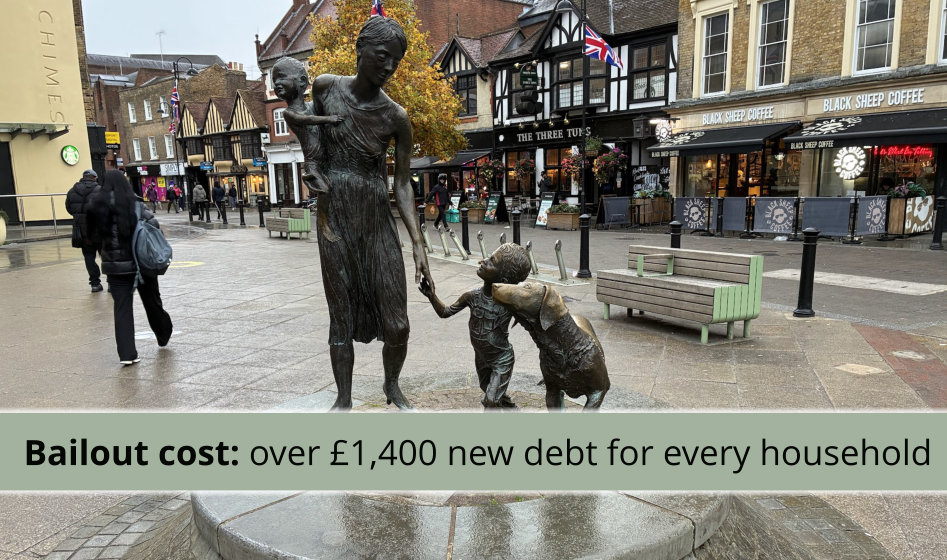
To put this £150 million figure into perspective: there are 106,874 Band D equivalent properties in Hillingdon. This loan effectively places over £1,400 of new debt onto every household, which we will be paying back for 20 years – without residents having had any say in the matter.
In September 2025, the then-Cabinet Member for Finance assured the public that this support would have “no cash cost which falls upon local residents.” This was flatly contradicted in January 2026 by the Council’s own Corporate Director of Finance, who admitted to a Select Committee: “Just to be clear, EFS is not free money. It needs to be repaid.”
Yet, the Council now appears to be hedging, suggesting they “don’t know” how much they will actually borrow – implying it could be less. Is this is a pretence? The budget figures require an amount to set a legal budget: the books cannot be balanced on a wish!
When challenged on this with a Public Question at January’s Full Council meeting, the new Cabinet Member for Finance, Cllr Eddie Lavery, refused to provide a specific figure for the annual cost. Instead, he offered an explanation so heavily laden with jargon that it seemed designed to confuse rather than clarify:
“Every pound is still charged back to the minimum revenue provision with interest… but not costs that add to the original burden as they’re fully built into our financial plans.”
This is a reference to a “Capitalisation Direction” – a mechanism that allows the Council to treat day-to-day spending as if it were a long-term loan. The technical distinction between “revenue” and “capital” does not change the bottom line: interest must be paid from the revenue budget, which directly impacts the funding available for frontline services.
Claiming it doesn’t “add to the burden” because it is “built into the plan” is a semantic game that residents cannot afford to play. If the budget suggests this will cost over £10m a year in repayments and interest, that is £10m every year that cannot be spent on services.
At current Public Works Loan Board interest rates, the Council could end up paying back nearly double the amount borrowed over the 20-year term.
This obfuscation hides a simple truth: if you are repaying a loan with interest (which the budget suggests will cost over £10m a year), that is money which cannot be spent on services. Claiming it doesn’t “add to the burden” because it is “built into the plan” is a semantic game that residents cannot afford to play
2. The Culture of “Late”: From Accounts to Budgets
Late accounts, late budget monitoring, and a late budget. With “disclaimed” accounts for successive years, auditors warn they cannot tell if the chaos is due to fraud or error. Read more…
Read more of our February 2026 series
- Introduction: Mistakes, misjudgements, or systemic breakdown?
- 1. The £150m Bailout: “Accounting Adjustments” vs Reality
- 2. The Culture of “Late”: From Accounts to Budgets
- 3. The “Theo’s Café” Scandal: Claims of cronyism and confirmed secrecy
- 4. The Silent Treatment: 12 Weeks and Counting
- 5. Putting Residents First? Not always
- 6. An addiction to “Special Urgency” – for secrecy or last minute work?
- 7. The secret £3.3m planning system
- 8. Decision-Making Based on Flawed Data
- 9. Are they taking heed of the “Section 24” warnings?
- Summary: The Case for Concern – is something broken at our Civic Centre?
- What Now? What do you think? You have until Wednesday to tell the Council

Comments are closed.