
More than sixteen months after residents were promised rapid work on the “obvious risks” at Ruislip Lido, Hillingdon Council has finally published its new Operational Safety Plan. It contains some welcome improvements to emergency access, traffic management and incident reporting – but the document says that the specialist water safety plan is still to be produced, while the hours of evening enforcement remain unclear and the latest specific water-body risk assessment still dates from 2021.
The 37-page Ruislip Lido Operational Safety Plan, dated 1 August 2026, has now appeared on the Council’s website. It was prepared by external consultants A.C.T. (National) Ltd in conjunction with Hillingdon Council, and is intended to cover the day-to-day “Business-as-Usual” operation of the Lido.
There is some genuinely useful material in it, and it would be wrong to pretend otherwise. Responsibilities are clearer, there is now a specific emergency-services rendezvous point and route into the Lido, the Tier 1 traffic arrangements contain actual staffing numbers, and there is a formal procedure for recording and investigating accidents and near misses.

Those are welcome improvements.
But the most important part of the document is probably the short section headed “Water Safety”. It acknowledges that despite No Swimming signs, people are known to ignore them and enter the lake from the beach. It then says the existing risk assessment and controls “may benefit from an external review”, before adding that “a water safety plan will be devised for the Lido as a separate document and an external water safety consultant engaged to review and make any required amends.”
That leaves us in a slightly extraordinary position.
At our AGM in April 2025, the then-Leader of the Council, Cllr Ian Edwards, acknowledged the “obvious risks” at the Lido and said the work would be “picked up very quickly”. In February this year, Cllr Wayne Bridges told us officers were progressing matters with “specialist external advisors”. At our March AGM, Cllr John Riley said the external organisation was expected to report “in the next few days”.
Then, on 26 May, a child was pulled unconscious from the water and required CPR before being taken to hospital.
We now finally have the external Operational Safety Plan. Yet on the particular risk which came closest to killing somebody this summer, the document says another plan still has to be devised and another specialist still has to be engaged.
A plan for daily operations, but not the site-wide risk assessment we were promised
There is an important distinction in the title of what has been published.
A.C.T. has produced an Operational Safety Plan. It sets out responsibilities, procedures and arrangements for running the Lido. It is not itself a comprehensive hazard-by-hazard assessment showing each significant risk, its likelihood and severity, the existing controls, the residual risk and any further controls required.
The document itself makes this clear. Its introductory note says it should not be considered in isolation, but alongside the Lido Risk Assessment, Fire Risk Assessment and the Council’s other safety policies, procedures and individual risk assessments.
Its own section headed “Risk Assessments” says applicable assessments are to be developed and communicated and their control measures implemented as required.
So we now need a fairly simple clarification from Hillingdon: is this Operational Safety Plan what the Council considers to be the work residents were promised in 2025, or is there still a separate site-wide risk assessment to come?
That matters because we have already seen the Council’s specific assessment of the lake itself.
The 2021 water risk assessment that nobody has updated in 5 years
As we reported last month, risk assessment 781, Ruislip Lido water body, covers “Drowning, catching an infection through contact with the water” for all visitors.
It dates from July 2021.
The document rates the risk at “10 – Moderate Risk” before its listed controls and still “10 – Moderate Risk” afterwards. Those controls include signage, red flags, water testing and life rings. Its field for additional control measures says simply: “none”.
We checked all nineteen Lido risk assessments. None of the other eighteen had a higher rating, while several covering lower-rated hazards had been reviewed and refreshed in 2025.
The newly published Operational Safety Plan does not replace that 2021 assessment. Instead, the Council’s new external safety consultant records that people continue to enter the lake from the beach and says the existing assessment and controls may benefit from an external review.
That is essentially the review residents have spent more than a year asking for.
The latest specific water-body assessment is therefore still the 2021 document which gives the risk a residual score of 10 and proposes no additional controls, while the new 2026 Operational Safety Plan says further specialist water-safety work is needed.
We would now like to know when that work began, whether the specialist has actually been appointed, what they have been asked to consider and when residents will be able to read the resulting Water Safety Plan.
There is no completion date for it in the document.
A new rendezvous point for emergencies (even if reaching it remains a problem)
There is considerably more substance elsewhere in the new plan.
Hillingdon Council, as owner and operator, is expressly responsible for ensuring that appropriate resources, facilities and competent personnel are provided for the health and safety of people working at or visiting the Lido. The Lido Manager is then given responsibility for implementing and monitoring the plan and ensuring that accidents, incidents and near misses are investigated.
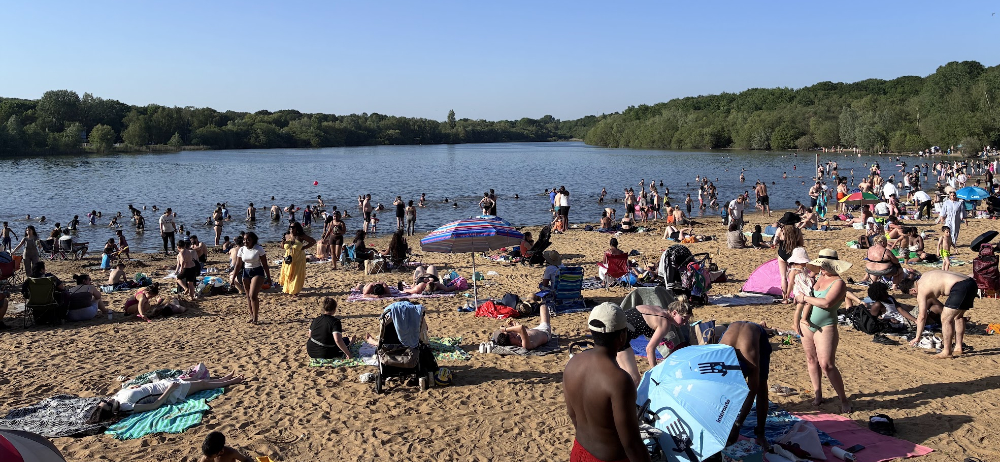
There is also now a designated emergency-services rendezvous point at the main gate in Reservoir Road, with the lower road behind the boathouse identified as the principal route into the site. A nominated member of staff or security is supposed to meet incoming emergency vehicles and direct them to the incident.
That is particularly welcome given the repeated concerns residents have raised about emergency access through Reservoir Road, including the severe congestion seen during the emergency response on 26 May.
There is also a formal procedure for recording accidents, incidents and significant near misses, with the stated aim of identifying lessons, remedial action and preventing recurrence.
These are useful changes. They provide clearer structure around what happens when something goes wrong.
But there is still an important difference between improving the process for responding to an incident and reducing the underlying risk which causes it.

More detail on Tier 1 traffic cover, but the evening enforcement gap remains unanswered
The Tier 1 traffic arrangements are much more specific than anything residents had previously been shown.
The plan provides for five parking-enforcement officers in total, one tow truck, four traffic marshals in the Lido car parks, four at the crematorium overflow car park, further marshals at other overflow parking and marshals at the end of Reservoir Road. Four variable-message signs are also specified around surrounding roads.
That is a considerable improvement in detail.
What the plan does not tell us is exactly how Tier 1 is triggered.
It says the highest level applies when a high volume of visitors is anticipated because of weather forecasts, seasonal or planned activities or events. But there is no temperature threshold, predicted visitor number, activation deadline or named officer identified in the document.
That is not an abstract concern. The near-drowning on 26 May did not happen on a Bank Holiday weekend. It happened on a Tuesday during the school half-term holiday.
There is also still no answer here to the evening staffing problem residents have repeatedly raised. The document says the Lido is officially open until 9pm in May, June, July and August. It tells us how many staff may be deployed under the different tiers, but not what hours they work.
Residents have previously documented different enforcement resources finishing at different times, with traffic marshals leaving while significant numbers of visitors remain at the Lido on hot evenings. The new plan gives us much more information about how many people may be there, but still does not tell us how long they stay.
An impressive-looking Tier 1 staffing list is only as useful as the system which activates it on the right day and keeps the resources in place for the hours they are actually needed.
missing medical plans: What happens next time someone is pulled from the lake?
The medical section raises similar questions.
During normal “Business-as-Usual” operation, the plan says first aid is available from the Woodlands Activity Centre or café. A professional medical provider may be brought in for larger planned temporary events.
What it does not set out is a detailed normal-day response for somebody in difficulty in the lake.
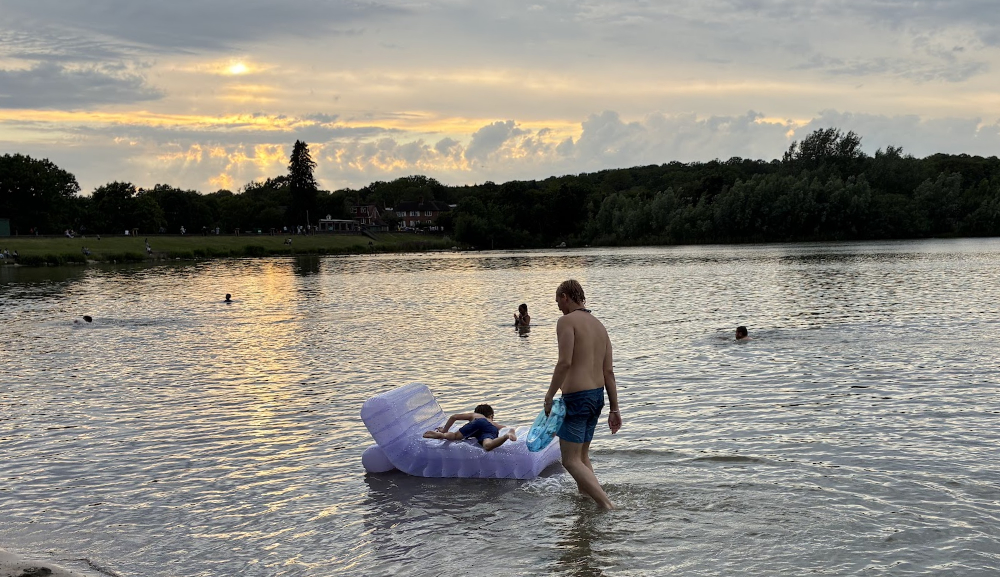
There are no lifeguards specified, no dedicated water-safety personnel and no water-rescue procedure in this document. The medical section does not identify the location of the defibrillators, the level of first-aid qualification available throughout the day or the response expected if somebody is pulled unconscious from the water.
That is particularly difficult to read after 26 May, when the child survived because suitably skilled members of the public happened to be present and were able to provide CPR and use a defibrillator before the emergency services arrived.
The plan also does not answer the specific signage issue we raised at Full Council. Visitors arriving from the bus stop and main parking area can walk a considerable distance beside the lake before reaching the beach, while the most obvious No Swimming warnings are concentrated closer to the beach itself.
The Operational Safety Plan simply records that warning signage is posted. It does not appear to contain a survey of whether those signs are sufficiently prominent, appropriately positioned or visible when the site is at its busiest.
Perhaps that will form part of the separate water-safety review. We would certainly expect it to.

Nearly 900,000 visits need properly funded management
The plan also contains useful information about the sheer scale of the Lido.
Appendix D records 896,970 footfalls during 2025. Elsewhere, the document says that peak periods can see more than 20,000 visitors a day and that 2025 data recorded a maximum attendance in excess of 30,000 people.
Those figures do not tell us where visitors live, and should not be confused with the separate argument over the Council’s previous claims about “survey data” and Hillingdon residency.
They do, however, underline the scale of the operation.
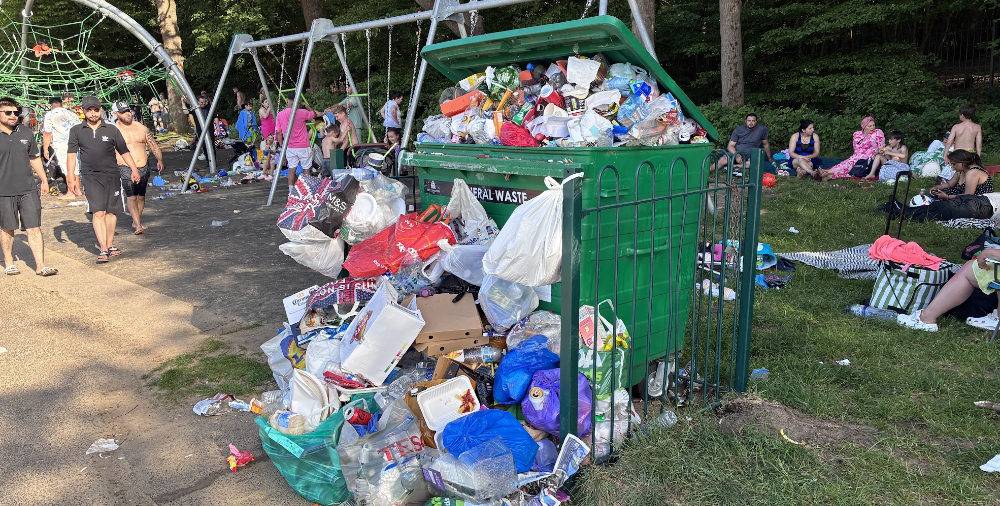
A site capable of receiving nearly 900,000 visits a year and more than 30,000 people on its busiest days needs sufficient funding for traffic management, enforcement, first aid, safety staffing and the other controls necessary to keep it functioning.
The RRA has previously asked the Council to reconsider charging non-Hillingdon residents for entry, both to help manage visitor numbers and to contribute towards the considerable cost of operating the Lido. Nothing in this new plan resolves that debate, and the new footfall figures do not tell us how many visitors live outside Hillingdon.
But nearly 900,000 annual visits certainly reinforce the wider question of how the resources required by the new safety arrangements are going to be paid for. It is little use producing increasingly detailed plans if the people required to operate them are not funded for the hours when they are needed.
Generic templates and the parts of the plan that clearly aren’t finished yet
It is referred to as a “live document”, perhaps as a euphemism for an incomplete one. There are some odd signs that the published Revision 4 is still not finished.
Page 7 is headed “Health & Safety Statement of Intent”. Beneath it is a single sentence saying the Council’s current Health and Safety statement is only “available on request”.
The plan also commits to producing a Serious Incident Management Plan, covering evacuation, invacuation and lockdown protocols for fire, medical emergencies and structural failure — but says this “shall be produced for any major events,” rather than describing one that already exists for day-to-day operation. It is not clear whether an ordinary Tuesday during half-term, of the kind on which the 26 May incident occurred, would count as a “major event” that triggers this plan at all. We would argue that 30,000 people gathering at the Lido on a hot summer day is a major event in its own right, and demands a standing incident plan.
More strikingly, the lost-child procedure in Appendix C contains a flowchart headed:
“Process for a lost child / vulnerable person (to be updated to follow Lido process)”
It then refers to “Event Control”, security and stewarding, an “onsite policing team” and “lockdown procedures on the exits”.
That sits rather awkwardly alongside the same document’s description of the Lido as public open space with multiple entrances and “no access controls.”
Elsewhere, the generic safety wording even contains a reference to private generators being used on “camp/caravan sites”.
None of this means the Operational Safety Plan should be dismissed…. the document itself describes it as a “live document”, capable of amendment as circumstances and risks develop.
But it is reasonable to ask why something now at Revision 4, and being published on the Council’s website as the Operational Safety Plan for Ruislip Lido, still contains material expressly marked as needing to be updated to the actual Lido’s daily operations.
It also reinforces the importance of seeing the separate Water Safety Plan before anyone concludes that the promised safety work is anything like complete.

Two revisions straight after 26 May: what did the Council change in the days following the near-drowning?
The revision history gives us another useful line of enquiry.
The first version was issued to Hillingdon for consideration and comment on 31 March 2026. Revision 1 followed on 29 May, three days after the near-drowning, with another revision on 3 June. Following a final site visit, Revision 3 was handed over to the Council on 29 June, with further Council amendments incorporated into Revision 4 on 1 August.
There is nothing unusual about a consultant producing drafts and revising them following comments from its client. The dates alone do not tell us why any individual change was made, and we should not pretend that they do.
But given the significance of the incident on 26 May, there is an obvious and entirely reasonable question:
What did the pre-incident version say about water safety, and what changed afterwards?
We will be asking to see the earlier versions.
Where this leaves residents
After more than a year of chasing the promised safety work, we are pleased finally to have a substantial document to examine.
There is clear progress in parts of it. Management responsibilities are better defined, emergency access is more clearly planned, traffic resources are more specific and there is now a formal process for investigating incidents and near misses.
But the document also confirms that the work is not finished.
On the particular issue which nearly resulted in a tragedy in May, the Council’s external safety plan says another specialist still needs to review the controls and a separate Water Safety Plan still has to be produced.
So, for now, there are three things we want to see.
- First, the promised specialist work on water safety: who is doing it, when it will be finished, and whether the 2021 water-body assessment has finally been replaced.
- Second, a clear explanation of how the Tier system actually works in practice: including who activates it and how late the various staff remain on duty.
- Third, the earlier versions of this report: so residents can understand what changed during its development – particularly before and after 26 May.
There has been progress. We are pleased to see it.
Now we need to see the part about the water.
Help us keep asking the questions
If you are contacting Hillingdon Council or your ward councillors about the new Operational Safety Plan, we would particularly encourage you to ask when the separate Water Safety Plan will be completed, what staffing and enforcement remains in place throughout the Lido’s 9pm summer opening hours, and whether the Council will publish the earlier versions of the ACT report so residents can see how it developed before and after 26 May.
Please copy us into any replies you receive at lido@ruislipresidents.org.uk. It helps us build a clearer picture of what residents are being told and ensures that answers given individually do not disappear into separate email chains.
If you have witnessed water-safety problems, swimming, inadequate signage, emergency-access difficulties, traffic problems or other incidents at the Lido, we would also like to hear from you through the same address or our Contact Form.


Comments are closed.