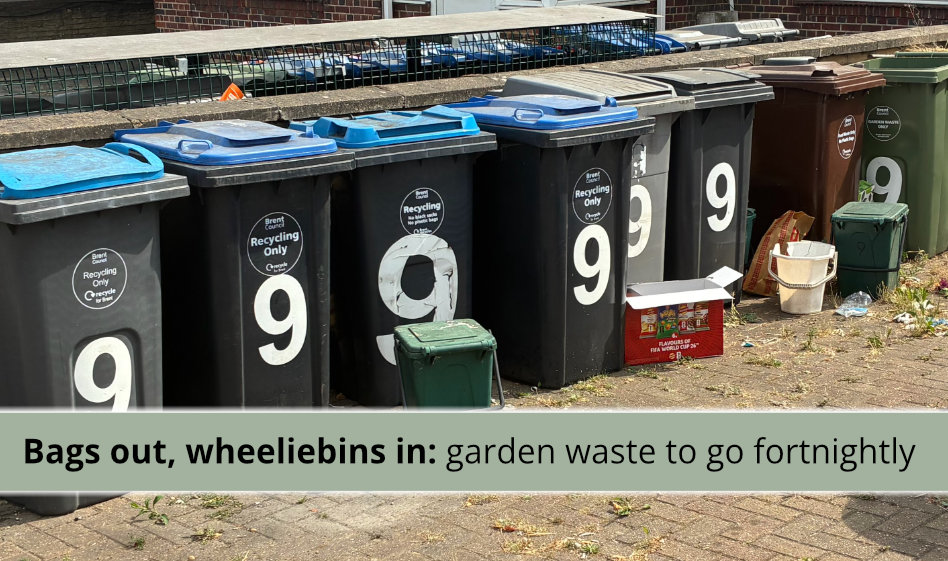
If you pay for garden waste collections in Hillingdon, the service could look very different from April 2027. The Council wants to replace the reusable 90-litre sacks with 240-litre wheeliebins, collected every two weeks all year round instead of weekly for most of it. The charge would be £69 per bin.
The decision is being made by Cabinet, the seven senior councillors who run the Council, led by Cllr Steve Tuckwell, on Thursday 22nd October. The Council’s report says no public consultation is proposed.
Hillingdon’s Conservatives fought May’s election saying they would keep weekly collections and have had a long-time promise not to bring in wheeliebins. The Council is run by a Conservative administration, and the report doesn’t mention that pledge.
What would change in April 2027: wheeliebins, fortnightly collections, and £69 a bin
| Now | Proposed from April 2027 | |
| Container | Re-usable 90-litre sacks, 3 or 6 for the same price | 240-litre wheeliebins |
| Collections | Weekly for about nine months, fortnightly in winter | Fortnightly all year: 25 collections, with a two-week Christmas break |
| Price | £77 a year | £69 per bin |
| Cost of tags or bins | Bag tags: about £100,000 a year | Bins: £1.2m in the first year |
Who gains and who loses: one bin saves £8, but six sacks becomes £61 more
The report says a 240-litre wheeliebin has “a similar capacity” to three 90-litre sacks. By our arithmetic it is actually slightly smaller: 240 litres against 270, so about 11% less. A household with three sacks, paying £77, would need one bin and pay £69, which is £8 less. However…
A household with six sacks would need two wheeliebins, and pay £138. That is £61 (79%) more, for the capacity of about five sacks, compared with six sacks for £77 this year. The report says about 7000 current subscribers have six bags. Some may choose one bin and use the Harefield recycling centre for the rest, which the report itself concedes.
Most people will fold up their garden waste bags between collections, and certainly over the winter – but especially among allotment-owners and keen gardeners where they would need two bins – which they’d need to keep in their front garden all year round. Nobody will be able to fold up a 240-litre wheeliebin, never mind two of them.
Everyone would also get fewer collections. In the two paid-for years of 2025 and 2026 we were told there were 42 a year, so reducing it to 25 is about 40% fewer. A household with three sacks can currently put out 270 litres every week for about nine months of the year.
One 240-litre bin every fortnight is less than half of the 540 litres the sacks hold over the same two weeks. The report argues that bins can be packed fuller and hold more weight than the same volume of sacks, but as we are increasingly finding as we read these reports – these claims and assertions give no figures on how full sacks are now, so benchmarking is impossible.
Hillingdon Conservatives’ election video for the May 2026 elections:
then-Leader Ian Edwards spoke of the weekly collections
Quick recap on the story so far: free collections, then a £70 charge, then £77
Garden waste collections used to be free. The Council introduced a charge in July 2025, at £70 a year, to contribute £2.5 million to its savings. This year it is £77, and 23,105 households had subscribed by 6th October, according to the report. That is almost the same as last year’s 23,240, and well above the mid-April figures in our May article. It brought in £1.8m, still short of the £2.5m target. Ruislip (2,555) and Ruislip Manor (1,358) have about one in six of all subscribers. The full list by ward is in the box below.
Open - Garden waste subscribers in every ward
Garden waste subscribers by ward, as of 6th October 2026
| Ward | Subscriptions | Total paid |
| Belmore | 604 | £46,508 |
| Charville | 642 | £49,434 |
| Colham & Cowley | 939 | £72,303 |
| Eastcote | 2,857 | £219,989 |
| Harefield Village | 401 | £30,877 |
| Hayes Town | 393 | £30,261 |
| Heathrow Villages | 417 | £32,109 |
| Hillingdon East | 1,251 | £96,327 |
| Hillingdon West | 702 | £54,054 |
| Ickenham & South Harefield | 2,121 | £163,317 |
| Northwood | 1,594 | £122,738 |
| Northwood Hills | 1,805 | £138,985 |
| Pinkwell | 586 | £45,122 |
| Ruislip | 2,555 | £196,735 |
| Ruislip Manor | 1,358 | £104,566 |
| South Ruislip | 1,636 | £125,972 |
| Uxbridge | 1,025 | £78,925 |
| West Drayton | 743 | £57,211 |
| Wood End | 689 | £53,053 |
| Yeading | 472 | £36,344 |
| Yiewsley | 315 | £24,255 |
| Total | 23,105 | £1,779,085 |
Source: Hillingdon Council’s Garden Waste report to Cabinet, 22nd October 2026.
The wider picture: about 5 of the 322 RAGCs the Council needs to find
At the RRA we measure council savings in RAGCs. “One RAGC” is £150,000, named after the Rural Activities Garden Centre the Council closed last year. CIPFA, the public finance body that reviewed the Council for the government, puts its underlying budget gap at £48.3 million, which is 322 RAGCs. The government has also issued a formal warning, a Best Value Notice, citing a lack of “organisational grip”.
The report says the change would save about £800,000 a year, cutting the service’s net cost from about £900,000 to £100,000. That is about 5 RAGCs of the 322. The dog bin proposal is a separate saving, worth about two-thirds of one.
For scale, Hillingdon didn’t raise council tax at all for ten years, from 2009-10 to 2018-19. That was a choice made by Ray Puddifoot and his Conservative administration, and supported at the time by some of those still in the administration today. CIPFA says the freeze is largely why Hillingdon’s Band D tax is now £234 below the outer London average, and bringing it back up to that average would raise around £26.6 million a year, about 177 RAGCs.
The report gives a different reason for the savings: a revised Government funding formula that it says will cost Hillingdon £65m over two years. We can’t check that figure here. It comes from the Council’s February budget report, and the Best Value Notice makes no comment on the fairness of Hillingdon’s funding.
£1.2m of wheeliebins to save £100,000 of tags?
In March we questioned a £137,000 budget line for non-recyclable plastic tags. The report now puts their cost at about £100,000 a year. (What’s £37k between friends?! It’s only the Council tax paid by a street of 18 houses!)
It says wheeliebins won’t need controls in the first year, because only subscribers will have them, and that controls will be “significantly cheaper” afterwards. Sacks would stay for properties that can’t take a bin, so some tags may carry on.
Cabinet is asked to release £1.2 million from capital contingency for 40,000 wheeliebins. That is twelve years of tags. The Council’s real case is the £800,000 a year from running a third fewer trucks and crews, which would repay the bins in about eighteen months, if that figure holds. And even if every six-sack household bought two bins, current subscribers would need about 30,000, against the 40,000 ordered. The rest are for growth and spares.
We’re not sure where one wheeliebin would go in our front gardens, so good luck to whoever has to store a minimum of 10,000 of them!
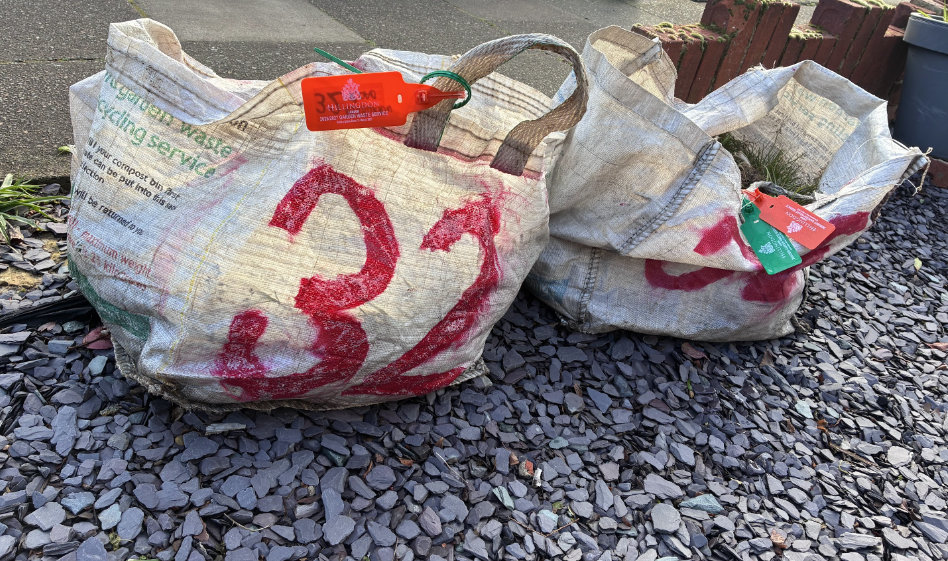
It would be the ultimate humiliation for a garden recycling bag… to have over 100,000 of them put in the black bag rubbish and sent to be incinerated – while wearing their green and orange tags
What the report doesn’t say about vehicles, black bags, concessions or evidence
- Properties where a bin won’t fit. Sacks would stay for them. But the report’s own safety argument is that sacks can weigh well over 30kg when full, and that fortnightly collection from sacks would leave too many too heavy to lift. It gives no number of properties, no price and no frequency for them.
- What the vehicles cost. Six hire vehicles from April 2027, then six new bin-lifting lorries that take 18 to 24 months to deliver. No costs are given, and the lorries’ cost goes into the budget strategy next February, after Cabinet has committed. It isn’t clear whether the £800,000 is before or after the cost of those vehicles.
- Where the £800,000 comes from. The report credits fewer trucks and crews, and doesn’t state its income assumption. One-bin households would pay less, and households that move from six sacks to two bins would pay more.
- Black bags. The report doesn’t mention residual waste, which rose by about 1,245 tonnes in the first 30 weeks after charging started, according to our FOI data. By our estimate that cost about £132,000 extra to dispose of. The report gives no sign that its £900,000 net cost includes anything for this, and the risk table doesn’t list it.
- Concessions. The report proposes none. Four of the five councils in its own comparison table offer a reduced rate to residents on certain benefits.
- Rules to be decided later. Property suitability, replacement bin charges and where wheeliebins must be placed would be left to the Corporate Director, in consultation with Cllr Wayne Bridges.
- The evidence. The only appendix is a capital release table, and the only background paper is the February budget report. The “examples” of bins increasing participation aren’t named, and the equality screening, which concluded that a full assessment isn’t needed, isn’t attached.
No consultation, and an election promise the report doesn’t mention
The Council says garden waste is a “discretionary, chargeable service” and that this is a change in how it is delivered, not a withdrawal, so it won’t consult. That is the same reasoning it used for the dog bins. The 2025 charge did go to consultation, with 8,242 responses.
The weekly collections have been a priority and source of pride for the administration for a long time, as seen in this 2022 election campaign video
The Cabinet’s priorities for 2026–2030, adopted last month, promise “listening to your views to shape what we do” and “reliable weekly waste collections”. Garden waste is a separate service, so the Council may say the second doesn’t apply. But the election promise was to keep weekly collections and not to bring in wheeliebins, and from April 2027 garden waste would no longer be weekly at any time of year.
What happens next: Cabinet decides on 22nd October, then a week to call it in
Cabinet meets at 7pm on Thursday 22nd October at the Civic Centre in Uxbridge. You can read the report and watch the meeting live on YouTube, or watch the recording afterwards. You can also attend in person, with ID and security checks, but you can’t speak, and there are no public questions. Email is the way to be heard, so write to the Cabinet members before then, and tell them if one of them is your ward councillor:
- Cllr Steve Tuckwell, South Ruislip (Leader of the Council)
- Cllr Richard Mills, South Ruislip (Deputy Leader; Delightful Yuzu; Corporate Services, Digital & Transformation)
- Cllr Wayne Bridges, Hillingdon East (Residents Services; leads on this report)
- Cllr Eddie Lavery, Ickenham & South Harefield (Finance)
- Cllr Adam Bennett, Hillingdon West (Community, Environment & Enforcement)
- Cllr Susan O’Brien, Ruislip Manor (Adults, Children, Health & Care)
- Cllr Nick Denys, Eastcote (Planning, Housing & Property)
Cabinet’s decisions are published the day after the meeting, usually on the Friday. The Residents’ Services Select Committee then has five working days to call one in, which would mean by 5pm on Friday 30th October. A call-in needs a majority of the committee, so four of its seven members:
- Cllr Peter Smallwood (Chair), Ruislip
- Cllr Daniel Singham, Eastcote
- Cllr Tommy Balaam, Harefield Village
- Cllr Riley Russell, Uxbridge
- Cllr Navnit Dhesi, Hayes Town
- Cllr Kamal Preet Kaur, Wood End
- Cllr Paul Capps, West Drayton
If you want to ask the committee to call it in, write to its members as well as to Cabinet.
If you subscribe, or did and gave up, we’d like to hear from you and we’ll share in a future update what we receive. If you email the Cabinet members or the committee, please copy us in: secretary2@ruislipresidents.org.uk.
Join our newsletter mailing list


Comments are closed.